
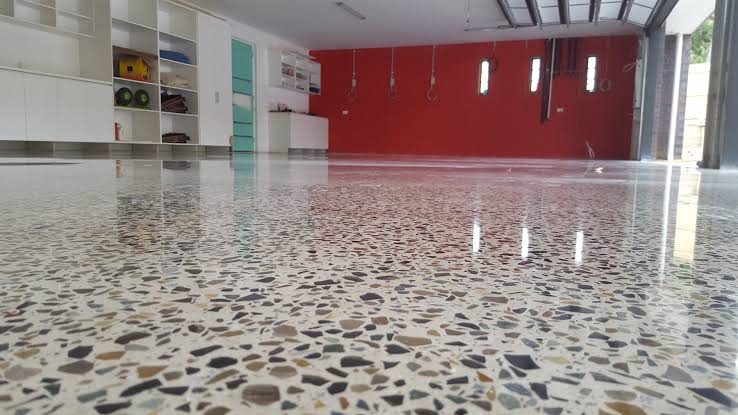
A floor affects hygiene, glare control, foot comfort, maintenance time, and long-term building cost. Timber, carpet, vinyl, tile, epoxy, and stone all serve particular needs, yet each can introduce weak points. Polished concrete starts with the structural slab already in place. Through grinding, hardening, and refinement, it becomes the finished surface, without relying on a covering that may lift, stain, loosen, or wear through.
Built From the Slab
Most coverings depend on adhesive, grout, backing, or a surface film. Mechanically polished concrete instead refines the existing slab through diamond abrasives and chemical densification. That method can expose fine or larger aggregate, set the gloss level, and produce a dense finish for homes, clinics, offices, hospitality spaces, studios, and retail areas.
Longer Service Life
Carpet fibres crush under repeated foot traffic. Timber can gouge, cup, or lose its coating. Vinyl dents when heavy equipment applies pressure. Tiles crack if substrate movement transfers upward. A polished slab gains surface hardness during densification, so wear develops slowly. With correct cleaning, it can remain usable for decades, reducing replacement waste and avoidable shutdowns.
Lower Cleaning Effort
Daily soil behaves differently on each material. Carpet holds dust, skin flakes, pollen, and odour. Grout lines trap residue after mopping. Polished concrete provides custodial teams with a smooth, low-porosity surface that is easy to sweep. Neutral cleaners and clean water usually handle routine care. Wax, topical shine products, and aggressive stripping schedules are rarely needed.
Better Light Reflection
Light return matters in rooms where people read, cook, work, or inspect products. Dark textile floors absorb brightness. Flat finishes can make circulation zones feel dull. Polished concrete reflects available light according to the selected sheen. Satin finishes soften glare, while higher gloss can brighten corridors, showrooms, kitchens, and open offices. Better reflection may reduce daytime lighting demand.
Strong Design Range
Concrete has more visual range than many expect. Aggregate exposure may be light, medium, or heavy. Sheen can shift from a restrained matte to a clear gloss. Colour depends on cement tone, stone content, and earlier slab work. That variation gives designers a finish with depth without adding another layer of flooring. It can suit calm residential rooms or precise commercial interiors.
Fewer Layer Failures
Many floor failures begin at the bond line. Moisture vapour, impact, or poor preparation can cause coatings to blister. Laminate may swell after repeated wetting. Timber boards move as humidity changes. Polished concrete avoids a thick applied film as the main wearing surface. Because the slab itself is refined, damage assessment and future maintenance are more straightforward.
Hygiene Advantages
Cleanability affects indoor health and presentation. Carpet can retain allergens, fine dust, and stale smells between deep cleans. Grout joints collect moisture and organic residue. A polished slab leaves fewer recesses where contaminants can lodge. Routine cleaning removes visible soil quickly. In food service, offices, clinics, and shared facilities, that simple regime supports a cleaner working environment.
Cost Over Time
Upfront pricing depends on slab hardness, cracks, coatings, access, exposure depth, and gloss target. A poor slab needs more preparation than a clean new pour. Even so, lifetime cost often favours polished concrete. Fewer replacement cycles, lower chemical use, and lighter routine labour all count. Over several years, that can outweigh the cost of a cheaper covering installed at the start.
Sustainability Benefits
Many buildings already have a concrete base, so using it as the finish can reduce the demand for extra material. Removing carpet, vinyl, and laminate often becomes bulky waste. Polishing can also support brighter interiors by reflecting available daylight through occupied areas. For projects where material efficiency matters, the approach offers practical environmental value while keeping a finished appearance.
Where It Works Best
Polished concrete suits spaces needing durability, easy cleaning, and a clear visual line. Common examples include living areas, garages, galleries, cafés, warehouses, offices, retail floors, and workshops. Results depend on proper slab assessment before work starts. Moisture, cracks, hardness, contamination, and previous coatings all influence finish quality. Good preparation protects both appearance and service life.
Conclusion
Mechanically polished concrete combines durability, cleanability, design control, light reflection, and long-term value into a single surface. Other materials still have a place, especially where softness, acoustic absorption, or removable finishes are required. Yet many residential and commercial settings benefit from a floor with fewer layers and lower upkeep. Its practical strength is simple: the structural slab becomes the finished surface, ready for daily use.